Grubs or Drought? Solving the Mystery of Brown Patches in Your Utah Lawn
Learn how to distinguish between grub damage and heat stress in your Northern Utah lawn. Expert tips for diagnosis and treatment.
Grubs or Drought? Solving the Mystery of Brown Patches in Your Utah Lawn
Introduction
You've been diligently caring for your lawn all season. You applied GrubEx in late spring, you're watering every three days, and yet... those dreaded brown patches have appeared. If you're a Northern Utah homeowner scratching your head over whether grubs or the scorching summer heat is to blame, you're not alone. Let's dig into this common lawn care conundrum and arm you with the knowledge to diagnose and tackle the issue head-on.
The Usual Suspects: Grubs vs. Heat Stress
Grub Damage: The Underground Menace
Grubs might sound harmless, but these C-shaped larvae of various beetles can wreak havoc on your lawn from below. Here's what grub damage typically looks like:
Irregular brown patches scattered across your lawn
Turf that feels spongy underfoot
Grass that can be easily pulled up, like peeling back a carpet
Possible signs of critter activity (birds or small mammals digging for a grub snack)
Heat Stress: When Your Lawn Can't Take the Heat
With temperatures soaring into the 90s, your cool-season grass might be waving the white flag. Heat stress often presents as:
Large, more uniform areas of browning
Grass that remains firmly rooted
Blades that may curl or feel crisp to the touch
No visible grubs when you inspect the soil
The Diagnostic Dig: Your Hands-On Detective Work
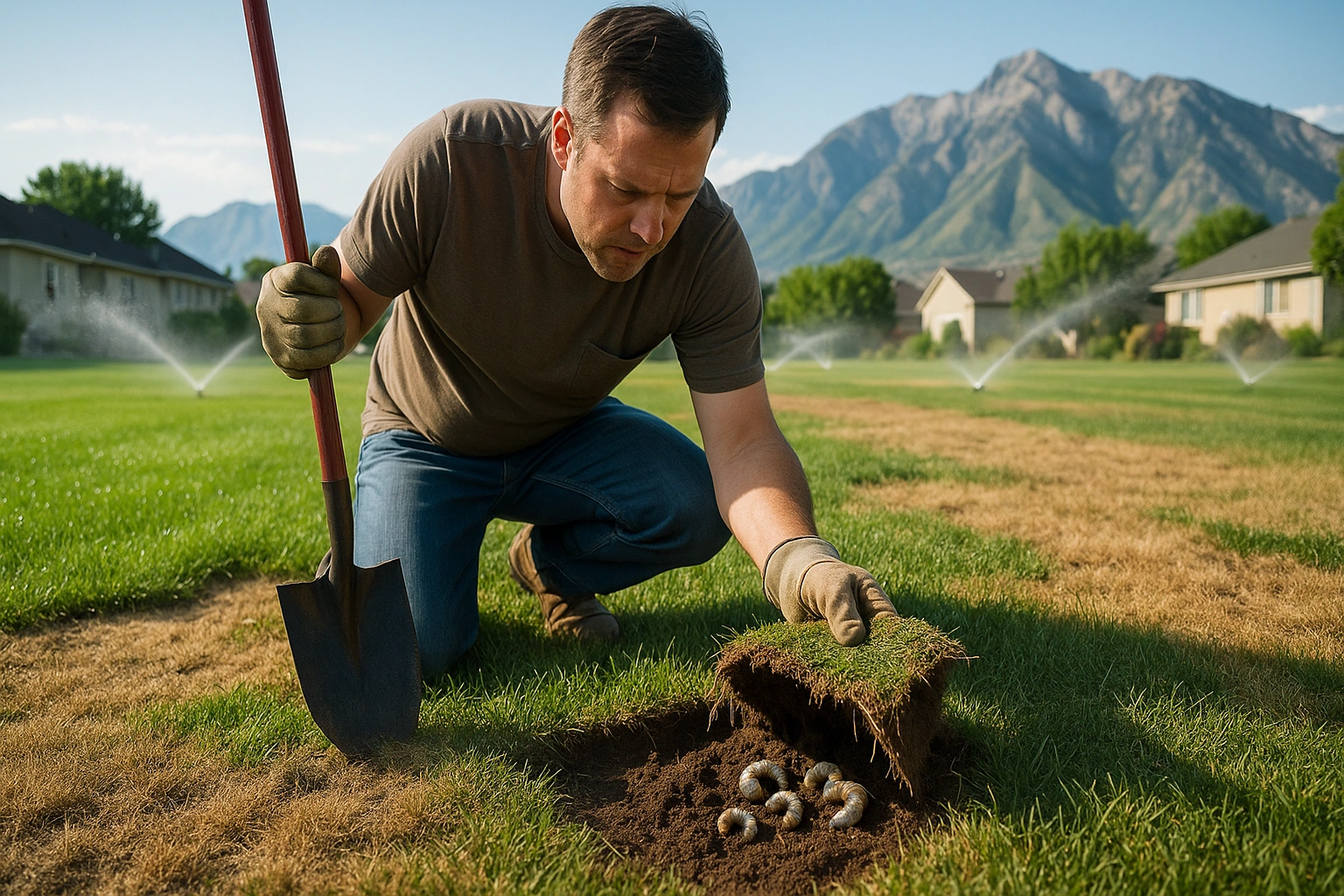
Here's where you channel your inner lawn detective. The most reliable way to distinguish between these two culprits is to get your hands dirty:
Choose a spot on the edge of a brown patch.
Using a shovel or strong trowel, cut a small square of turf (about 1 square foot).
Carefully lift the square, peeling it back like you're checking under a carpet.
Inspect the soil and roots:
If you see white, C-shaped grubs, you've found your culprit.
No grubs? Your problem is likely heat-related.
Pro Tip: Check a few different areas. Grubs aren't always evenly distributed.

Ready to transform your lawn?
Get personalized AI guidance for the perfect lawn. Download Grassmaster Gus now!
Timing is Everything: Understanding the Seasonal Dance
In Northern Utah, we're dealing with a perfect storm of conditions in mid-to-late summer:
July and August are prime feeding time for grubs.
These months also bring our most intense heat, stressing cool-season grasses.
This overlap can make diagnosis tricky, but understanding the lifecycle helps:
Grubs hatch from eggs laid in early summer.
They feed most vigorously in late summer before burrowing deeper for winter.
The GrubEx Question: Did Your Prevention Work?
If you applied GrubEx in late May or early June, you did the right thing for preventative control. However, it's not a silver bullet:
GrubEx targets newly hatched grubs, not mature larvae.
Severe infestations might require additional treatment.
Some grub species may be less affected by the preventative.
Solutions: Tailored Treatments for Each Culprit
If It's Grubs:
Light Infestation (1-5 grubs per square foot):
Focus on promoting healthy root growth.
Aerate in fall, overseed, and maintain proper watering.
Severe Infestation (6+ grubs per square foot):
Consider a curative grub treatment like trichlorfon or carbaryl.
Always follow label instructions carefully.
If It's Heat Stress:
Adjust Your Watering:
Water deeply but less frequently (your current 50 minutes every 3 days is a good start).
Aim for early morning irrigation to reduce evaporation.
Mowing Matters:
Raise your mower blade. Taller grass shades the soil and reduces water loss.
Easy on the Fertilizer:
Avoid heavy nitrogen applications during extreme heat.
Prevention: Your Year-Round Strategy
Grub Control:
Mark your calendar for late May to apply preventative treatments.
Monitor for signs of grubs in July and August.
Heat Resilience:
Maintain proper mowing height year-round (3-4 inches for most cool-season grasses).
Consider overseeding with more drought-tolerant varieties in fall.
General Lawn Health:
Aerate annually (spring or fall) to improve water penetration and root growth.
Adjust your irrigation system seasonally, especially during heatwaves.
A Word on Safety and Local Regulations
Always read and follow pesticide labels carefully.
Keep pets and children off treated areas until products have dried completely.
Check with your local extension office for any restrictions on chemical use in your area.
Conclusion: Your Lawn, Your Detective Work
Remember, a healthy lawn is your best defense against both grubs and heat stress. By understanding the signs and taking prompt action, you're well on your way to maintaining that lush, green carpet you've worked so hard to achieve. Don't be discouraged by a few brown patches – they're just opportunities to refine your lawn care expertise.
So grab that shovel, inspect those roots, and give your lawn the targeted care it needs. With the right approach, you'll be back to barefoot-worthy turf in no time. And hey, your neighbors might just start wondering what your secret is.
Transform Your Lawn with AI-Powered Care
Join thousands of homeowners achieving their dream lawn with personalized guidance from Grassmaster Gus.
- AI-powered lawn analysis
- Personalized care schedules
- Expert advice 24/7
- Track lawn progress