Decoding Geolia's Sports Mix: Identifying Grass Types in Your Mediterranean Lawn
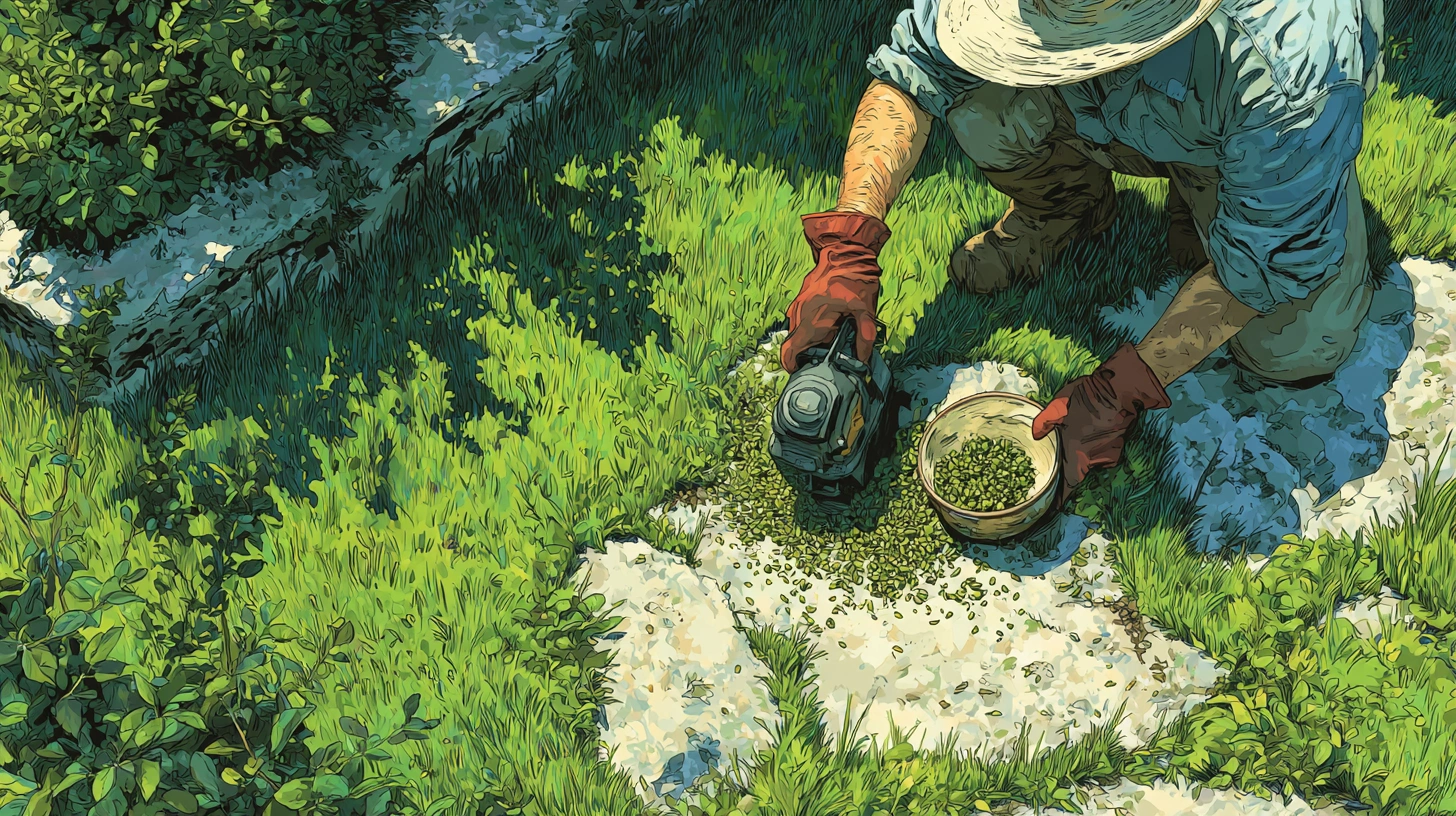
Uncover the mystery grasses in Geolia's sports seed mix. Learn how to identify and maintain your Mediterranean lawn like a pro.
Decoding Geolia's Sports Mix: Identifying Grass Types in Your Mediterranean Lawn
Introduction
Ever looked at your freshly overseeded lawn and wondered, "What exactly am I growing here?" If you've used Geolia's sports seed mix in your Mediterranean yard, you're not alone in this grass-roots mystery. While Geolia keeps their exact blend under wraps (trade secrets and all that), we can still put on our botanical detective hats and figure out what's likely sprouting in your lawn. Let's dig in and uncover the green giants hiding in plain sight.

Ready to transform your lawn?
Get personalized AI guidance for the perfect lawn. Download Grassmaster Gus now!
The Likely Suspects in Your Lawn
Geolia's sports mix is designed to take a beating and come back swinging. For our Mediterranean climate (think USDA Zone 10b), we're looking at a blend that can handle both your weekend football matches and the scorching summer sun. Here's what's likely lurking in that seed bag:
Perennial Ryegrass: The Speedy Starter
If you've noticed areas of your lawn greening up faster than you can say "goal," that's probably perennial ryegrass. This cool-season grass is the Usain Bolt of the turf world:
Quick to germinate: Often visible within a week of seeding
Fine texture: Narrow blades that create a dense, carpet-like appearance
Wear-resistant: Perfect for those impromptu backyard matches
Tall Fescue: The Drought-Defying Deep Rooter
When the summer heat kicks in, tall fescue is your lawn's secret weapon:
Deep root system: Can reach up to 2-3 feet deep, accessing water other grasses can't
Heat and drought tolerance: Stays green when other grasses start to brown
Coarser texture: Slightly wider blades than ryegrass, but still creates a lush lawn
Kentucky Bluegrass: The Self-Healing Spreader
Don't let the name fool you – this grass isn't just for Kentucky:
Spreads via rhizomes: Underground stems that help it fill in bare spots
Rich, blue-green color: Gives your lawn that picture-perfect hue
Soft texture: Creates a cushiony feel underfoot
Bermudagrass: The Heat-Loving Hustler
In our Mediterranean climate, bermudagrass might be the MVP of your lawn:
Thrives in heat: When cool-season grasses struggle, bermuda kicks into high gear
Drought-tolerant: Needs less water to stay green and healthy
Fast recovery: Bounces back quickly from wear and tear
Putting on Your Grass Detective Hat
Now, how do you figure out which of these grasses are actually growing in your yard? Here's your step-by-step guide to becoming a turf Sherlock Holmes:
Get down to grass level: You'll need to examine individual blades up close.
Check the vernation: This is how new leaves are arranged in the shoot. Ryegrass and fescue are folded, while bluegrass is rolled.
Look at the leaf tips:
Ryegrass: Pointed tip
Fescue: Pointed, but slightly rounded
Bluegrass: Boat-shaped tip (like the bow of a canoe)
Bermudagrass: Pointed, with small hairs visible
Examine the collar region: This is where the leaf blade meets the stem.
Ryegrass: Visible auricles (small, claw-like projections)
Fescue: Small auricles or none
Bluegrass: No auricles, split-sheath
Bermudagrass: Hairy ligule (membrane at top of sheath)
Observe the growth habit:
Ryegrass and Fescue: Bunch-type growers
Bluegrass and Bermuda: Spreading types (look for horizontal stems)
Pro Tip: Use a magnifying glass or your smartphone's macro lens for a closer look. It's like CSI: Lawn Edition!
Keeping Your Mediterranean Mix Thriving
Now that you've got a handle on what's growing, let's talk about keeping it in top shape:
Water deeply but infrequently: Encourages deep root growth, especially important for fescue.
Mow at the right height: Generally 2.5-3 inches for cool-season grasses, 1-1.5 inches for bermuda.
Fertilize smartly: Apply a balanced fertilizer in spring and fall for cool-season grasses. Bermuda might need more frequent, lighter applications.
Overseed in fall or early spring: This helps thicken the lawn and fill in bare spots.
Aerate annually: Reduces compaction and helps water and nutrients reach the roots.
Remember, in our Mediterranean climate, you might see cool-season grasses like ryegrass and fescue dominate in the milder months, while bermuda takes center stage during the hot summer.
Conclusion
While Geolia might keep their exact recipe a secret, you're now equipped to identify and care for the all-stars in your sports mix lawn. By understanding the likely players in your turf team, you can tailor your lawn care routine to keep your grass green, healthy, and ready for whatever activities you throw its way.
So the next time you're lounging on your lush lawn, watching the kids play, or setting up for a barbecue, take a moment to appreciate the complex ecosystem beneath your feet. You're not just growing grass – you're nurturing a resilient, multifaceted sports field right in your own backyard.
Now get out there and enjoy your lawn. After all, you've earned your turf detective badge!
Transform Your Lawn with AI-Powered Care
Join thousands of homeowners achieving their dream lawn with personalized guidance from Grassmaster Gus.
- AI-powered lawn analysis
- Personalized care schedules
- Expert advice 24/7
- Track lawn progress