Bagworm Control on Evergreens: Bifenthrin vs Malathion
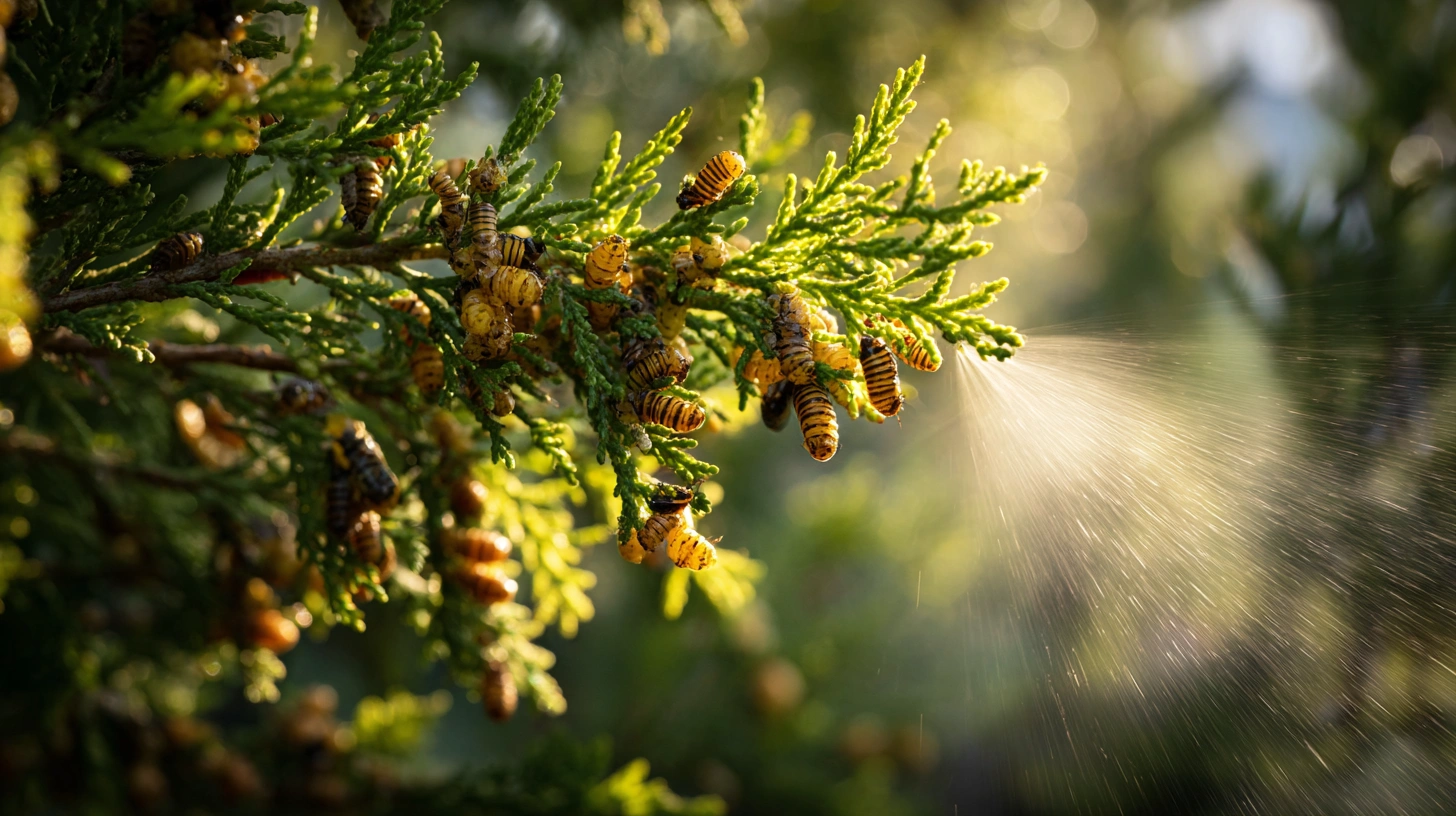
Learn how to protect your 30-foot evergreens from destructive bagworms in the Southeast. Compare bifenthrin and malathion, plus DIY tips.
Bagworm Control on Evergreens: Bifenthrin vs Malathion
Introduction
If you've spotted those little silk bags dangling from your 30-foot row of evergreens, you're staring down a classic bagworm infestation. In the Southeast, larvae hatch in late May through mid-June and start chewing your arborvitae, junipers or cypress to the bone. Miss the timing, and you're scrambling to revive brown, defoliated branches--and hoping the trees bounce back.
In this guide, you'll learn why timing and coverage matter far more than picking one chemical over another. We'll break down the pros and cons of bifenthrin for bagworms versus malathion bagworm treatments, cover DIY feasibility, and outline an Integrated Pest Management (IPM) plan that keeps your evergreens healthy year after year. I've dealt with bagworm outbreaks on properties just like yours, and I'll share the practical tips that protect your investment--without turning your yard into a toxic zone.
Problem Identification
Bagworms overwinter as eggs inside last year's bags. When larvae emerge, they begin feeding immediately, producing their own silk cases studded with needles and debris. On 30-foot trees, you'll often miss early infestations until browning appears. By then, bags are large, larvae are tougher, and sprays become less effective.
Key signs to watch for:
- Tiny bags (1/8-1/4 inch) in late May-early June
- Progressive browning of branch tips
- Leafless patches where larvae have fed heavily
Causes and Contributing Factors
A few things help bagworms take over:
- Dense plantings that let larvae crawl from tree to tree
- No mechanical removal of winter bags
- Poor timing--spraying when larvae are large or protected
- Lack of monitoring during the peak hatch window
Knowing these factors helps you plan a more effective response rather than just grabbing any spray off the shelf.
DIY Limitations and Professional Help
Treating bagworms on a single shrub? Easy: clip bags and spray Bt or spinosad on small larvae. But when you're facing a 30-foot line of evergreens, coverage is the real enemy. Home sprayers rarely reach more than 15-20 feet, and uneven spray means hungry caterpillars hide in untreated pockets.
I've seen homeowners spend hours on ladders, only to come back in July and find the problem doubled. For trees over 20 feet, a professional applicator with commercial equipment is strongly advised. Think of it this way: a one-time fee to get full coverage can save weeks of battling a resurgent infestation.
Mechanical and Biological Options
Handpicking and Winter Cleanup
For smaller trees, removing bags by hand during winter is the best first step. Each bag you pick up reduces next year's hatch by hundreds of larvae. But at 30 feet, you'll need poles or bucket trucks--another reason pros often have the edge.
Bt and Spinosad for Young Larvae
Bacillus thuringiensis (Bt) and spinosad are biological controls that target larvae under 1/2 inch long. They're gentle on bees and beneficial insects when applied early in the morning or late evening. If you catch the hatch early and can reach the foliage, these options work well as part of an IPM plan.

Ready to transform your lawn?
Get personalized AI guidance for the perfect lawn. Download Grassmaster Gus now!
Chemical Treatments: Bifenthrin vs Malathion
Both bifenthrin for bagworms and malathion bagworm sprays have their place--but only if you hit larvae when they're small and coat every inch of foliage.
Bifenthrin for Bagworms
Pros:
- Homeowner formulas readily available
- Effective knockdown on small larvae
- Longer residual activity
Cons:
- Highly toxic to aquatic life--avoid runoff
- Can disrupt beneficial predators, potentially leading to mite outbreaks
- Requires full label PPE and drift management
Malathion Bagworm Treatment
Pros:
- Organophosphate with strong efficacy at correct timing
- Slightly faster knockdown than some pyrethroids
Cons:
- Very toxic to bees and non-target insects
- Increasing EPA restrictions in certain counties
- Strong odor and short residual life require precise timing
Neither product is a silver bullet. Without thorough coverage--including undersides of needles--larvae will survive and rebuild the population.
Timing and Application Guidelines
In the Southeast US, bagworm larvae typically hatch from late May to mid-June. Check local extension bulletins (see Clemson Extension or NC State Extension) for region-specific dates.
Spray window essentials:
- Monitor for the first silky bags in late May.
- Apply spray when larvae are under 1/2 inch long.
- Use no-drift nozzles and spray in calm conditions (under 10 mph wind).
- Avoid rain within 24 hours after application.
- Repeat annually until no new bags appear.
Safety and Environmental Considerations
- Wear gloves, respirator, and eye protection per label instructions.
- Spray early morning or late evening to protect pollinators.
- Avoid treating on hot, windy days to reduce drift.
- Keep pets and children out of the area until the re-entry interval has passed.
- Be mindful of nearby water bodies; bifenthrin runoff can devastate aquatic life.
Integrated Pest Management for Long-Term Success
Chemical sprays alone won't solve a heavy bagworm problem year after year. An IPM approach combines:
- Winter bag removal on smaller trees
- Early-season biological sprays (Bt or spinosad)
- Targeted chemical treatments at larvae emergence
- Annual monitoring and record-keeping
- Professional intervention for large trees and hard-to-reach spots
By rotating control methods and targeting the right life stage, you'll reduce chemical reliance and keep bagworm populations in check.
Conclusion
Bagworm control on evergreens isn't a one-and-done deal--especially when you're dealing with 30-foot trees. Timing and coverage are your best weapons, whether you choose bifenthrin for bagworms or a malathion bagworm treatment. If your spray can won't reach the top, consider hiring a pro with the right gear. And don't skip the non-chemical steps: winter bag removal, Bt or spinosad on young larvae, and yearly scouting.
With a solid IPM plan and the right timing, you'll protect your investment, keep your evergreens lush, and avoid that dreaded brown war zone. Start monitoring in late May, plan your spray, and stay ahead of the next hatch. Your trees--and your neighbors--will thank you.
Transform Your Lawn with AI-Powered Care
Join thousands of homeowners achieving their dream lawn with personalized guidance from Grassmaster Gus.
- AI-powered lawn analysis
- Personalized care schedules
- Expert advice 24/7
- Track lawn progress